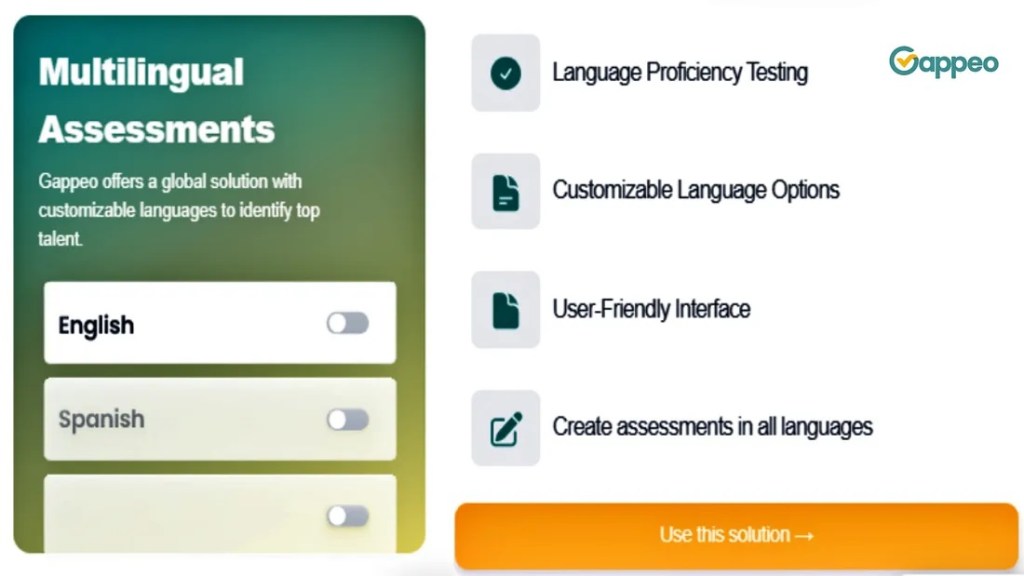
A key challenge in this process is language barriers during candidate evaluation. Offering assessments in multiple languages ensures that organizations can fairly and accurately evaluate candidates worldwide.
Multilingual assessments in hiring and how they can help companies identify the best talent while fostering diversity and inclusion.
Workflow for Implementation of Multilingual Assessment
1. Identify Key Languages
Understanding where the company operates or recruits from allows for a better decision on languages to be included in the assessments. These include:
Native languages belong to the target talent pool.
Main business languages used across the various markets in consideration.
2. Select The Right Format For The Assessment
Different job roles and industries require different assessment formats. Assessments can take any of the following forms:
Multiple-choice questions (MCQs)- are designed for general knowledge and technical skills.
Coding challenges- required for the development-related and engineering roles.
Situational judgment tests- tests for decision-making and problem-solving skills.
Essays- communication and critical-thinking skills are assessed.
3. Use A Professional Translation Service
Some procedures to render assessments accurately involve organizations that will:
Engage professional translators with experience in assessment content.
Get translations validated by native speakers to ensure an easy blockage of understanding and cultural relevance.
4. Use AI And Software Localization
Modern assessment platforms such as Gappeo offer AI-backed translation and localization services for multilingual assessment generation of the highest quality.
5. Conduct a Cross-linguistic Analysis of Results
Achieve scorings to be consistent through:
Standardized evaluation criteria for different language versions.
AI-powered analytics to be employed for linguistic group comparisons in the performance trends.
Learn More – Gappeo’s Talent and Skill Assessment platform

 Gappeo BLOG
Leave a comment